
Buy Less Stuff

Steps to Take
1. Be mindful of what items are “needs” and which are actually “wants,” and consider the climate impact of the items you consider purchasing.
2. Choose and commit to a specific “buy less stuff” plan. Make it specific and for a defined amount of time; when you’ve done that, consider what in your experience could be integrated as a permanent feature of your lifestyle.
3. Make a plan to reduce your consumption; for stuff you already own, re-use, repurpose, repair (or recycle) things, and donate or sell when appropriate.
4. Look for inspiration in other people’s experiences online (e.g., #BuyNothingChallenge, Mindfulness Spending), and ask your friends, neighbors, or family about their resource-saving actions.
5. Please reflect on your experience, and provide your thoughts by leaving a Testimonial.
Deep Dive
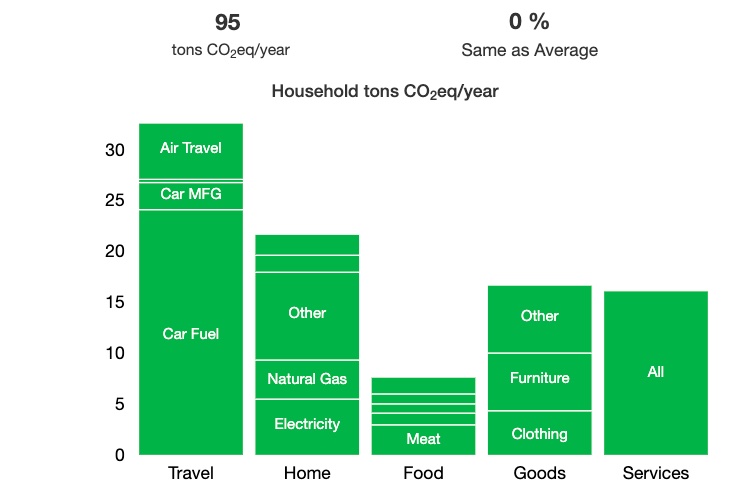
The CoolClimate carbon calculator indicates that a typical Wayland household is responsible for a lot of carbon emissions related to purchases: roughly 4.4 tons from clothing purchased each year, 5.7 tons annually for furniture purchased, and another 6.7 tons per year from other goods. This totals to roughly 17.5% of the total carbon footprint of the average family, as illustrated in the following chart:
Other sources of information on carbon emissions related to purchasing decisions:
• This Cooler/Smarter site by the Union of Concerned Scientists asks questions about your buying habits (based on data found here) to help people identify their emissions and target actions for reduction.
• You can learn more about the carbon footprint of your clothing with ThredUp’s Fashion Carbon Calculator.